Window & door installation contracts, without the paperwork.
Most jobs are still agreed on a quote and a handshake. That works right up until a customer remembers a different colour, a rotten lintel turns up on removal, or a deposit is disputed six weeks later. Here is what a contract should cover — and how to raise one in a click from a quote your customer has already accepted.
Built for installers in the UK and the US. Included in Pro at no additional cost.
What a good installation contract covers
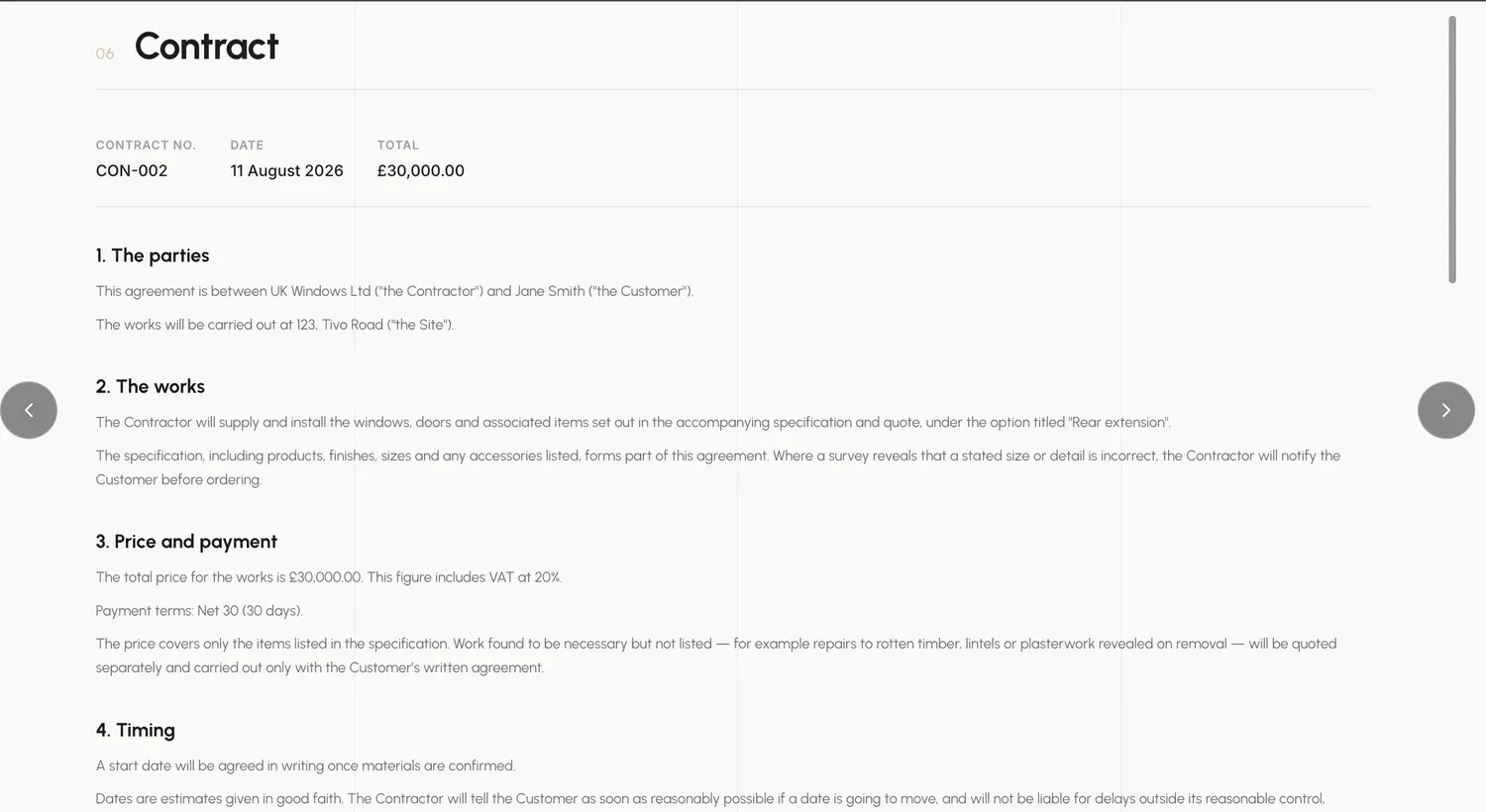
- The parties and the site — who is contracting, at what address, with your company or license number.
- The works — products, finishes, sizes and accessories, tied to the specification and quote rather than described loosely.
- Price and payment — the total, how tax is handled, what deposit is due and when the balance falls.
- Timing — start and duration as honest estimates, with manufacturer delays and unsafe weather called out.
- Variations — any change to scope, price or timescale agreed in writing before the work happens.
- Access and site conditions — what you need from the customer, what you will protect and remove.
- Warranties — your workmanship period, with manufacturer warranties passing through on their own terms.
- Insurance — that you carry liability cover and will evidence it on request.
The clause installers most often get wrong
Work found necessary but not quoted. Rotten timber, a failed lintel or header, plaster and drywall that disintegrates when the old frame comes out — none of it is visible at survey and all of it costs money. If the contract is silent, you are choosing between absorbing it and having an argument on site. The workable version: the price covers the listed specification only, and anything else is quoted separately and carried out only with written agreement. That protects the customer from surprise bills as much as it protects you, which is why it rarely gets pushed back on.
The right terms for where the work is
A contract for a job in Manchester should not be governed by the same law as one in Michigan, and the building-control route differs even within the UK. Unformed picks the clause set from the site address — England and Wales, Scotland, Northern Ireland, or the US — so the governing law, the compliance wording and the cancellation terms match where the work is actually happening. UK sets cite the Consumer Rights Act 2015 and the cancellation regulations that apply to contracts signed in a customer's home; US sets reference the three-day right to cancel and state permitting.
Raise it from the quote, sign it in the brochure
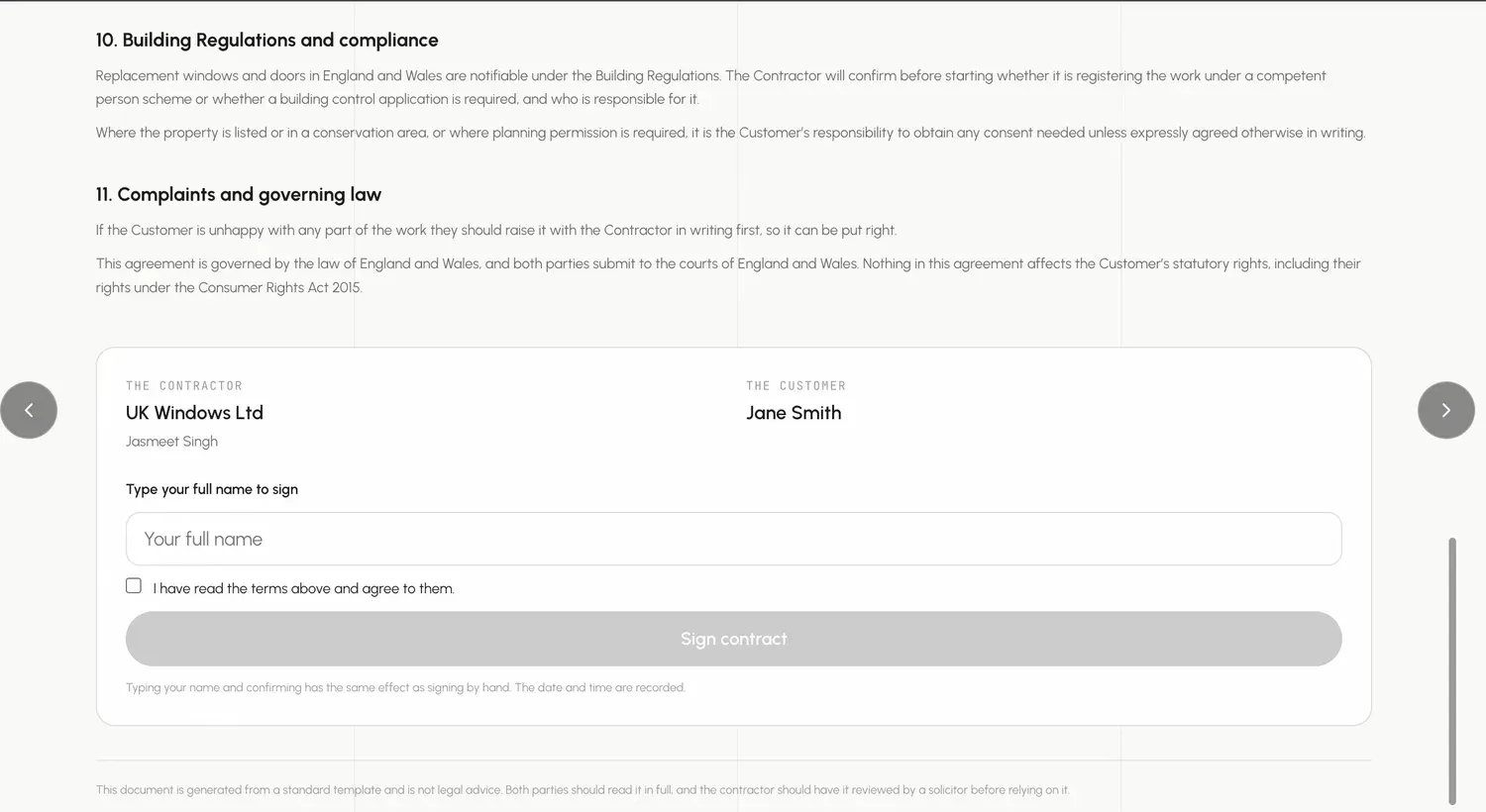
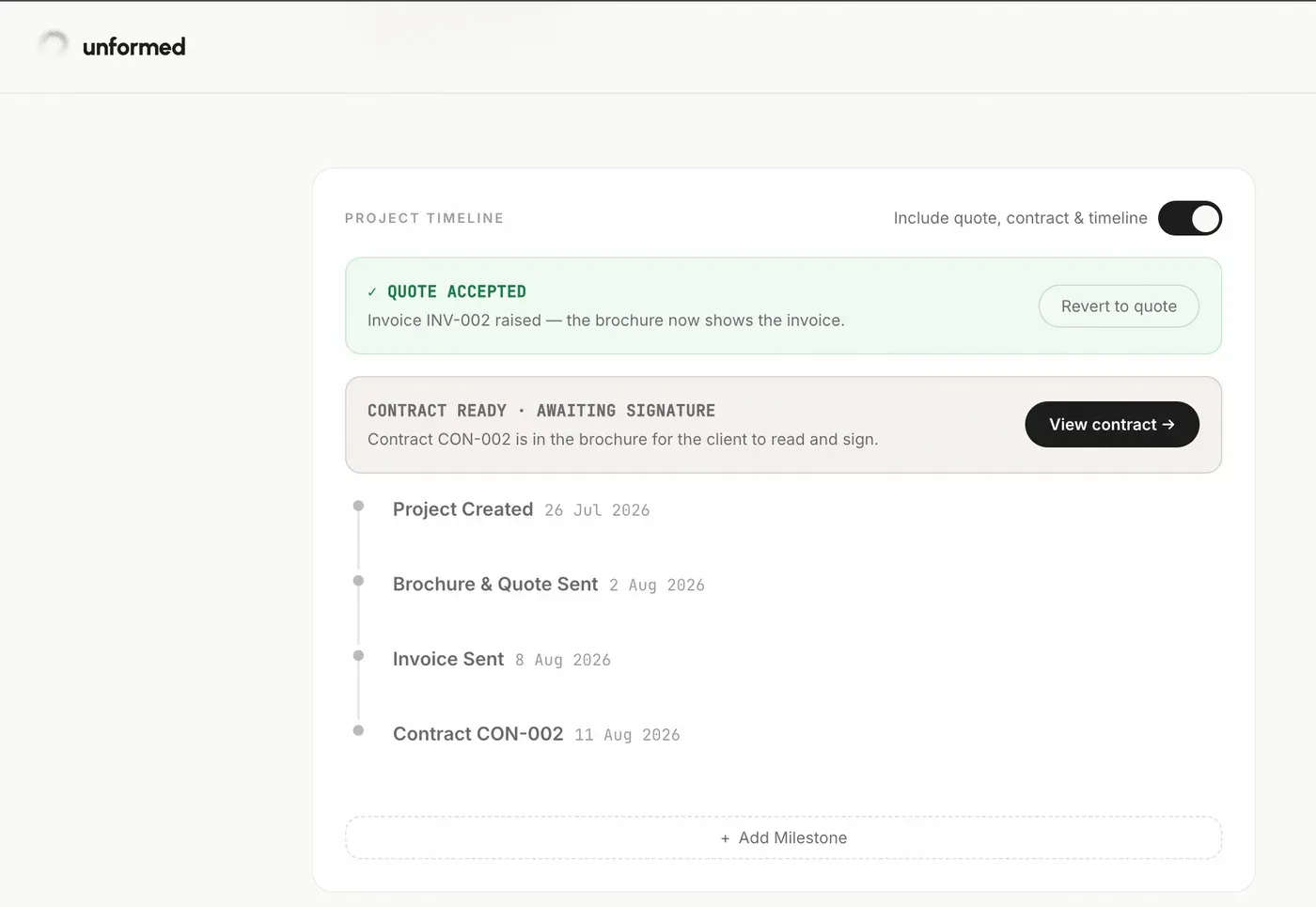
Once the customer accepts the quote, a contract takes one click. The products, prices, sizes and timings are already known, so the document fills itself in and lands in the same brochure the customer already has open. They type their name to sign, it is timestamped, and it drops onto your project timeline. A signature is final — re-signing is refused rather than overwriting the record. Add your own terms to the standard set and they carry through to every contract you raise.
Get it signed while they are still looking at the renders.
Contracts are included in Pro at no extra cost, alongside renders, brochures, quotes, invoices and campaign leaflets. Start with a free render.